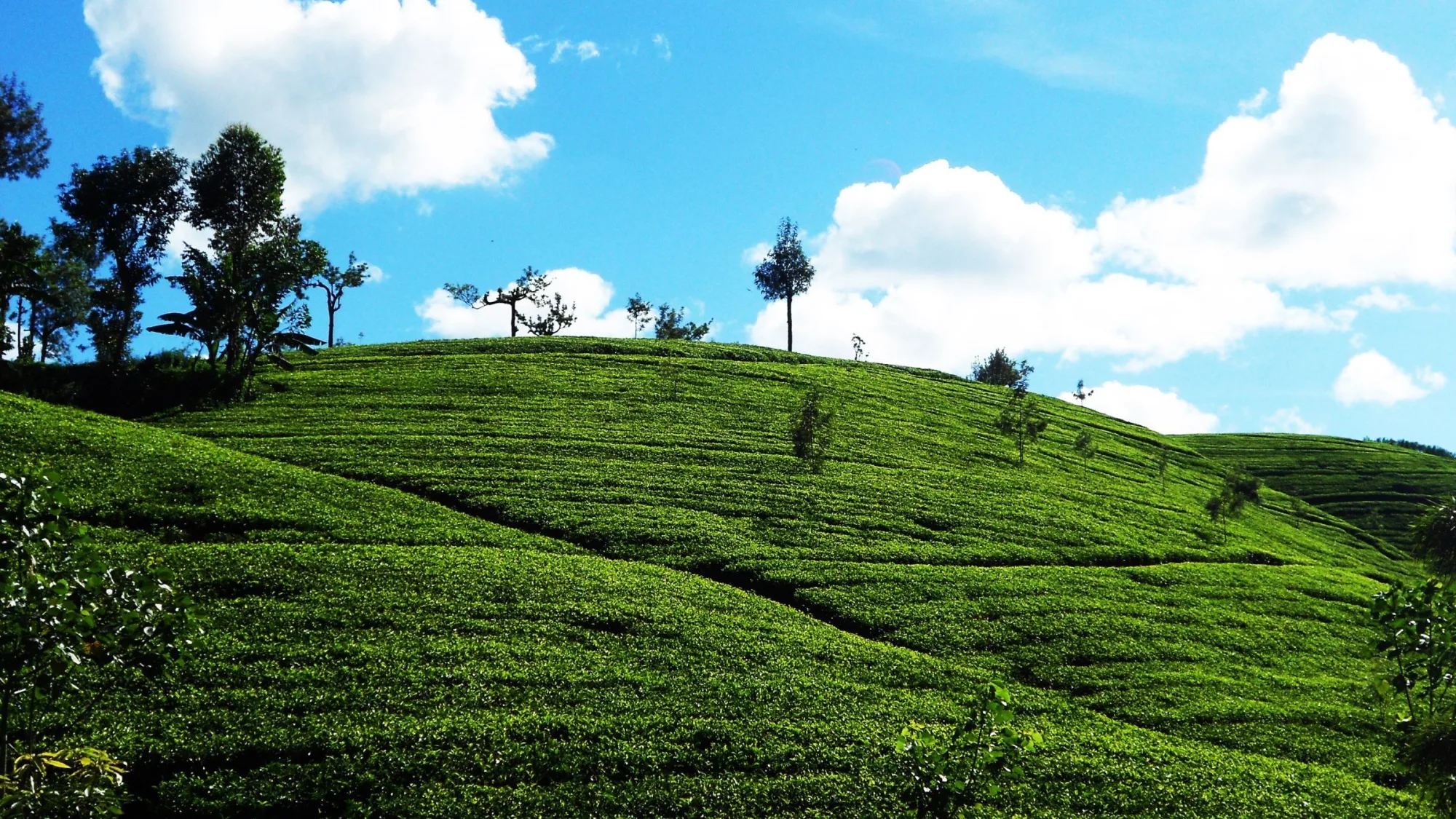
Tea arrived in Sri Lanka because coffee failed. A leaf rust wiped out the island’s coffee estates in the 1870s, and James Taylor’s experimental tea plantings at Loolecondera, near Kandy, turned out to be the replacement. Within thirty years tea had reshaped the hill country, its economy and its population.
A factory tour takes about 45 minutes and is one of the more genuinely interesting hours available in the hill country, provided you know what you are looking at.
Plucking
Two leaves and a bud, by hand. A plucker picks between 16 and 20 kilos in a day, which becomes about four kilos of made tea. It is done almost entirely by Tamil women whose families were brought from southern India by the British in the nineteenth century, and the working conditions on some estates remain a live political issue in Sri Lanka.
No machine does this well on a slope, which is why it is still done this way.
Withering
The fresh leaf goes into long troughs on the top floor of the factory, with air drawn through it overnight. It loses roughly half its moisture and becomes pliable enough to roll without shattering. The withering lofts are the part of the building that smells like nothing else.
Rolling and oxidation
Rolling machines bruise and twist the leaf, breaking the cell walls and releasing the enzymes. The leaf is then spread out and left to oxidise.
This stage is often called fermentation, which it is not — nothing is fermenting. It is oxidation, the same reaction that browns a cut apple, and it is where the flavour is actually made. Judging when to stop it is the skill the whole factory turns on.
Firing and grading
Hot air arrests the oxidation at the chosen moment. The tea is then sifted through a series of meshes into grades: BOP (broken orange pekoe), BOPF (broken orange pekoe fannings), Dust, and the whole-leaf OP grades.
Grade describes leaf size, not quality. The small grades brew fast and strong, which is why they end up in tea bags; the whole-leaf grades are subtler and slower.
What altitude does
Low-grown tea from Ruhuna, in the south, is strong, dark and malty. Mid-grown from around Kandy sits in between. High-grown from Nuwara Eliya, above 1,200 metres, is lighter, brighter and more floral — it is the tea the British kept for themselves and the one the estates still put their names to.
None is better than another. They are different drinks, and a factory that tries to tell you otherwise is selling you something.
Which factory to visit
Pedro Estate, just outside Nuwara Eliya, is a working factory and the closest to town. Damro Labookellie is on the main road down from Kandy and is free, which is why almost every tour bus stops there — it is a good introduction but a busy one. Mackwoods has the Hollywood-style sign on the hillside and a large tea room. Around Ella, several smaller estates run tours with fewer people in them.
Go in the morning, whichever you choose. Plucking happens early and the leaf reaches the factory through the day, so an afternoon visit often finds a quiet floor and a guide describing machinery that is not running.
And ask for the manager rather than the standard visitor tour if you actually want to understand the process. On most estates they are pleased to be asked.
Planning a trip? Have a look at the tea country itinerary, or every package we run.