Scenic
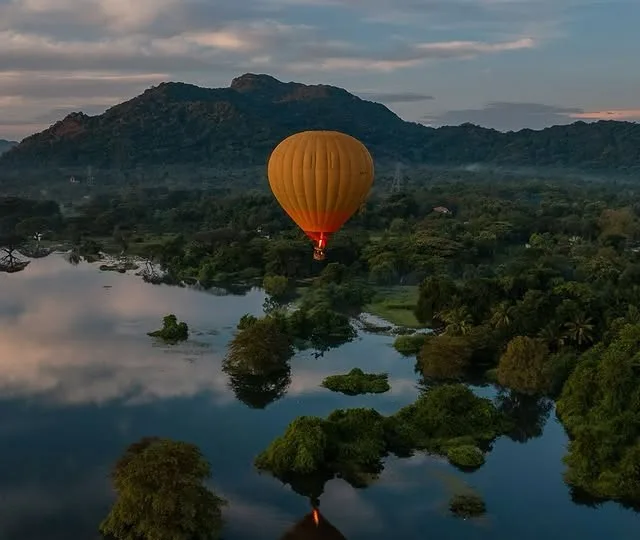
Hot air ballooning over the Cultural Triangle
An hour above Sigiriya at first light
Destination
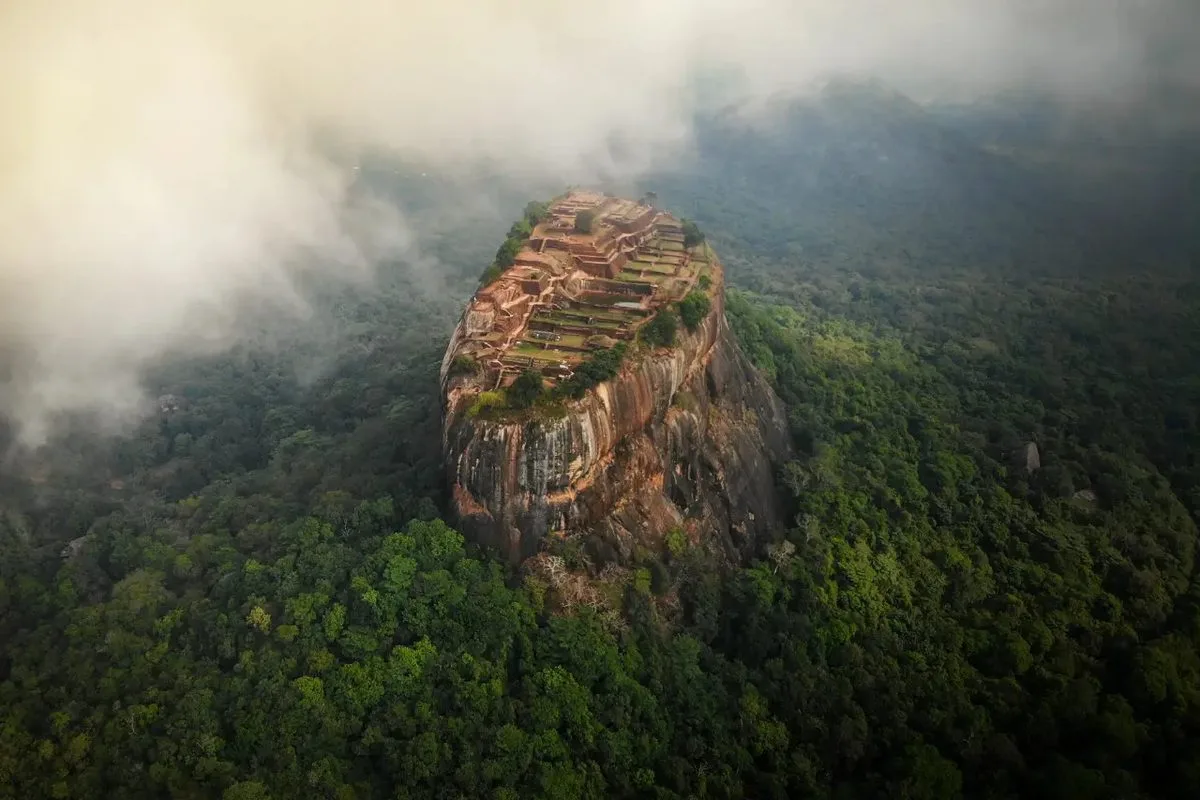
A granite plug with a fifth-century palace on top
Government site fees change without much warning. We confirm the current rate when we quote your trip.
Sigiriya is the single most recognisable thing in Sri Lanka, and it earns it. A 200-metre column of hardened magma rises straight out of flat scrub jungle, visible from miles away, with the ruins of a royal citadel on the summit. It is a UNESCO World Heritage Site and, on most itineraries, the reason people come to the Cultural Triangle at all.
Kassapa I moved his capital here in 477 CE after taking the throne from his father. He cut a staircase through the mouth of a brick lion — the two enormous paws at the halfway terrace are all that survives of it — and built a palace on the top. Eighteen years later he lost a battle on the plain below and the court moved back to Anuradhapura. The site was a monastery for another eight centuries, then jungle.
There are a little over 1,200 steps from the water gardens to the summit. Most people take 1.5 to 3 hours for the round trip including stops. The lower half is broad stone stairs through the gardens and boulder field. The upper half is metal staircases bolted to the rock face, including a spiral stair out to the fresco gallery and a caged walkway along the mirror wall. None of it is technical, but it is exposed, and it is hot.
If you are uneasy with heights or the heat, Pidurangala — the smaller rock across the field — is the honest alternative. It is a rougher scramble at the top but it costs a fraction as much, and it gives you the photograph everyone actually wants: Sigiriya itself, in the frame.
January to April is the dry season in the Cultural Triangle and the best window for the climb. The site is inland, so it sits outside both monsoons and is workable most of the year, but May to July can be punishing by nine in the morning.
Time of day matters more than the month. Gates open at 7am. Be there for opening. The metal staircases hold heat, the coach parties arrive from about 9am, and the queue at the fresco gallery is the bottleneck on the whole climb. An hour’s head start is the difference between a good morning and a bad one.
Entry is USD 35 for adults and USD 20 for children, payable at the ticket office near the western entrance. SAARC nationals pay a reduced rate. The Cultural Triangle round ticket, which also covers Anuradhapura, Polonnaruwa, Dambulla and the Temple of the Tooth, is worth checking if you are visiting three or more sites.
Sigiriya is about four hours from Colombo and roughly three from Kandy. Almost nobody comes only for the rock: it pairs naturally with Dambulla’s cave temples half an hour south, Polonnaruwa an hour east, and Minneriya or Kaudulla for elephants in the late afternoon. Two nights nearby gives you the rock at dawn, the caves at leisure, and a safari without rushing.
Foundations, a throne cut from bedrock, and the cisterns that supplied a court living on top of a rock.
Twenty-one surviving figures painted on a sheltered rock face in the fifth century. Photography is not allowed.
All that is left of a brick lion whose mouth the final staircase once passed through.
Symmetrical pools and fountains that still run in the wet season, among the oldest landscaped gardens in the world.
Just over 1,200. The lower half is stone stairs through the gardens and boulder field; the upper half is metal staircases fixed to the rock. Most people take between 1.5 and 3 hours for the round trip.
USD 35 for adult foreign visitors and USD 20 for children, with a reduced rate for SAARC nationals. If you are also visiting Anuradhapura, Polonnaruwa or Dambulla, price up the Cultural Triangle round ticket first. Government fees are revised periodically, so we confirm the current rate when we quote.
At opening, which is 7am. The rock faces the sun for most of the day, the metal staircases retain heat, and the coach groups arrive from about 9am. Starting at opening usually means finishing before the queues build at the fresco gallery.
They answer different questions. Sigiriya is the archaeological site — the frescoes, the gardens, the palace. Pidurangala is the viewpoint, cheaper and rougher underfoot, and it is the one that gives you a photograph with Sigiriya in it. If you have one morning and want the history, climb Sigiriya. Many people do both, Pidurangala at sunrise and Sigiriya after.
It is steep and exposed rather than technical. There are handrails throughout and places to stop. The two things that catch people out are the heat and, on the upper spiral staircase, a fear of heights. Neither is a reason not to go, but both are reasons to start early.
Trips that go here
From $305 / person
Start here
A few lines is enough — your dates, roughly what you want to spend, and what you actually care about seeing. And we will reply within one working day, and a quote costs you nothing.