Katunayake (BIA)SigiriyaAnuradhapura+3 stops
Pilgrim tour: Sigiriya, Anuradhapura and Kandy
From $305 / person
Destination
A sacred city, and 1,400 years of it
Government site fees change without much warning. We confirm the current rate when we quote your trip.
Anuradhapura was the capital of Sri Lanka for about 1,400 years, from the fourth century BCE until it was abandoned in 1017 CE. That is a longer run than almost any city anywhere. What is left is a UNESCO World Heritage Site spread over roughly 40 square kilometres of scrub and tank-fed forest — and, unlike Polonnaruwa, it is still a working pilgrimage centre. You will share it with more Sri Lankans in white than with tourists.
The Sri Maha Bodhi is the heart of it: a sacred fig grown from a cutting of the tree the Buddha sat under, planted here in 288 BCE. It is the oldest tree in the world with a documented planting date, and it is still tended. Approach it as a shrine, because that is what it is.
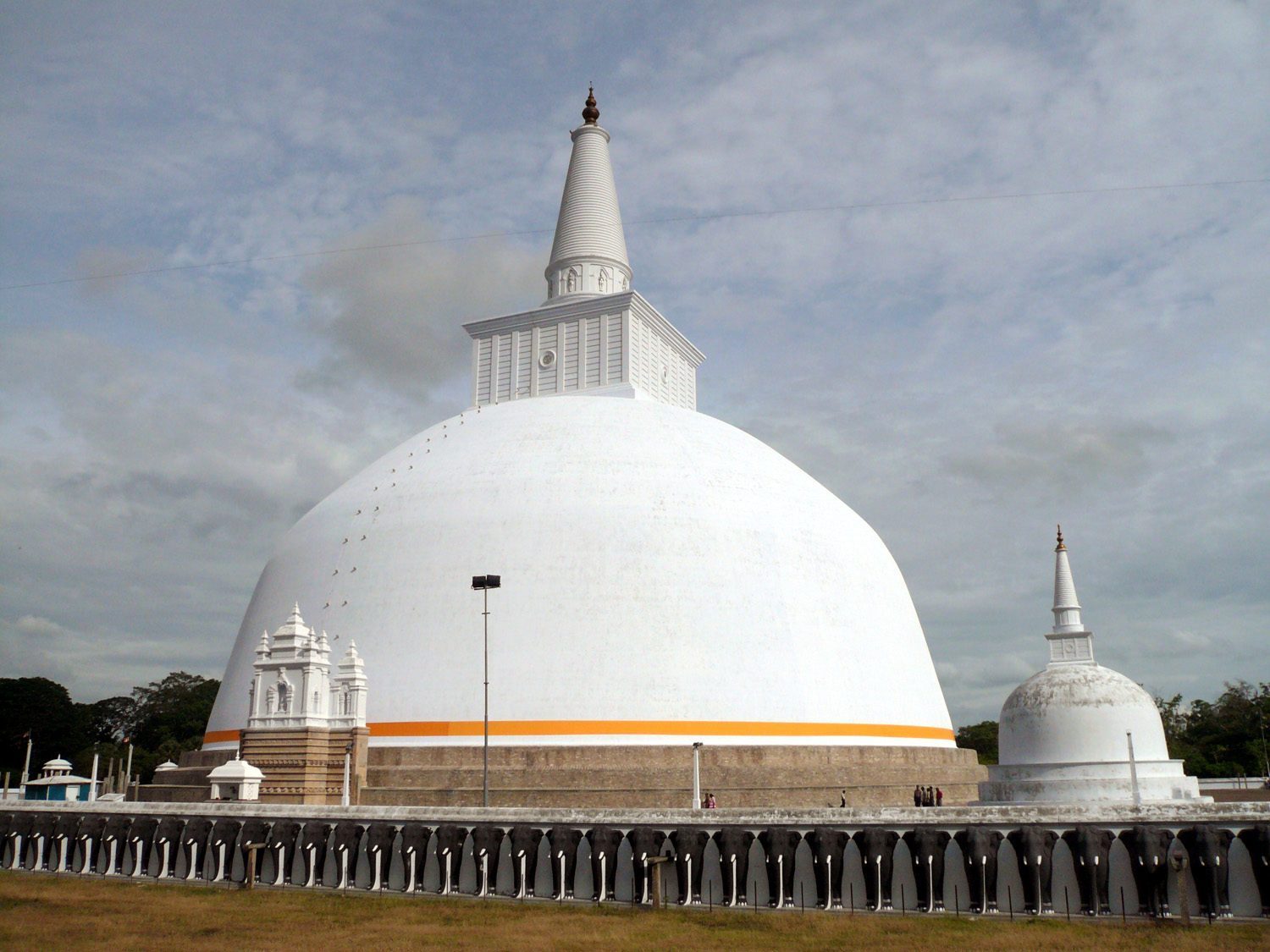
Ruwanwelisaya is the great white stupa, restored and blindingly bright at midday. Jetavanaramaya, further east, is red brick and unrestored — when it was built in the third century it was among the tallest structures on earth, and standing at its base is the more affecting of the two experiences. Abhayagiri, to the north, was a monastery of five thousand monks and is the quietest quarter of the site. Isurumuniya, near the Tissa Wewa tank, has the carved lovers relief and is small enough to take in properly.
The site is far too big to walk. A bicycle is the classic answer and the best one — the roads between the monuments are flat, shaded and quiet, and hiring one costs very little. A tuk-tuk for the day works if the heat is against you. Either way, plan a loop rather than doubling back.
Dress code applies at the sacred sites: shoulders and knees covered, shoes off at the stupa platforms. The stone gets extremely hot, so socks are not a bad idea.
Anuradhapura sits in the dry zone. Broadly it is good year-round, but the north-east monsoon brings rain from October to January, and the driest, clearest months are May to September. That makes it a useful counterpoint to the south coast, which is in monsoon over exactly that period.
Start early whatever the month. By eleven the open ground around the stupas is punishing.
Entry to the archaeological site is USD 25 for foreign adults. The Sri Maha Bodhi charges a small separate fee. If you are also visiting Polonnaruwa and Sigiriya, price up the Cultural Triangle round ticket before buying singles.
One full day. Anuradhapura is four hours from Colombo, an hour and a half from Sigiriya and about two and a half from Trincomalee, which makes it a natural stop between the Cultural Triangle and the east coast rather than a place to base yourself.
A sacred fig grown from a cutting of the Buddha's own tree, and the oldest tree on earth with a recorded planting date.
The great white stupa, restored and still central to pilgrimage here. Brightest and busiest at midday.
Unrestored red brick, and once among the tallest buildings in the ancient world.
A small rock temple with the famous carved lovers relief, easy to see properly in half an hour.
USD 25 per adult for the archaeological site, with a small separate charge at the Sri Maha Bodhi. If Polonnaruwa and Sigiriya are also on your route, compare it against the Cultural Triangle round ticket before buying single entries.
By bicycle, in most cases. The site covers around 40 square kilometres and is far too spread out to walk. The lanes between the monuments are flat, shaded and quiet, and hire is inexpensive. A tuk-tuk for the day is the alternative if the heat is against you.
One full day, starting early. That covers the Sri Maha Bodhi, the three great stupas and Isurumuniya at a pace that lets you actually look at them. By late morning the open ground around the stupas is very hot.
Shoulders and knees covered — this is an active pilgrimage site, not only a ruin. Shoes come off at the stupa platforms, and the stone becomes hot enough to be genuinely uncomfortable by mid-morning, so a pair of socks in your bag is a sensible idea.
Trips that go here
From $305 / person
Start here
A few lines is enough — your dates, roughly what you want to spend, and what you actually care about seeing. And we will reply within one working day, and a quote costs you nothing.