On the water
Learning to surf at Weligama
A long, forgiving beach break and a great many surf schools
Destination
Blue whales offshore, from November to April
Government site fees change without much warning. We confirm the current rate when we quote your trip.
Mirissa is a crescent of sand on the south coast with a fishing harbour at one end, and it is the main departure point in Sri Lanka for seeing blue whales. The continental shelf runs unusually close to shore here — the deep water is within a few nautical miles — which is why the largest animal that has ever lived can be found within an hour of the beach.
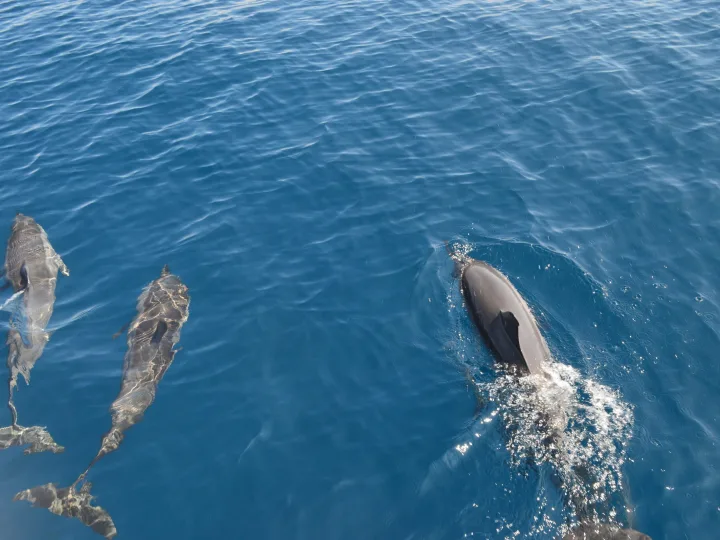
The season runs from November to April. February to April is the best of it: the winds drop, the swell settles and the sea is calmest, which matters more than most people expect on a four-hour boat trip. Blue whales are the headline sighting; sperm whales, Bryde’s whales and large pods of spinner dolphins are common.
Boats leave the harbour at around 6.30am and are usually back between 10am and midday. Take seasickness tablets an hour before boarding whether or not you think you need them — the swell past the shelf edge is real, and a boat where half the passengers are unwell is nobody’s morning.
This matters. Sri Lanka’s whale watching is lightly regulated and there have been long-standing problems with boats crowding animals, cutting across their path and running engines too close. A responsible operator keeps a distance of at least 100 metres, approaches from the side and never from in front, limits the time spent with any one animal, and carries fewer people than the boat can technically hold.
Ask before you book, not on the jetty. We only use operators who work to those rules, and we will say plainly if the sea state means a trip is not worth taking on a given morning.
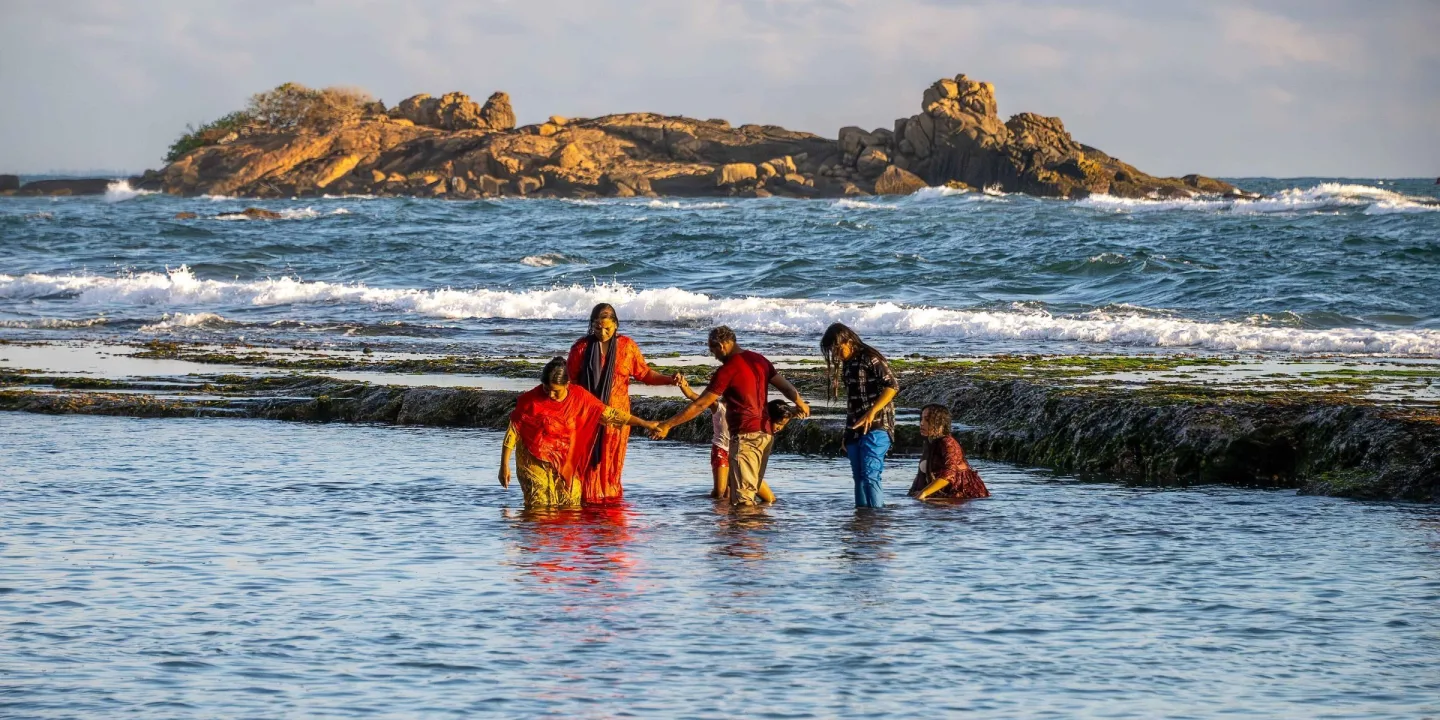
Mirissa’s bay is swimmable for most of the dry season, with a reasonable break at the eastern end. Coconut Tree Hill, the headland covered in palms at the eastern edge, is the photograph everyone takes; go at sunrise unless you want to queue. Parrot Rock, in the middle of the bay, is a two-minute scramble at low tide for a view back along the sand.
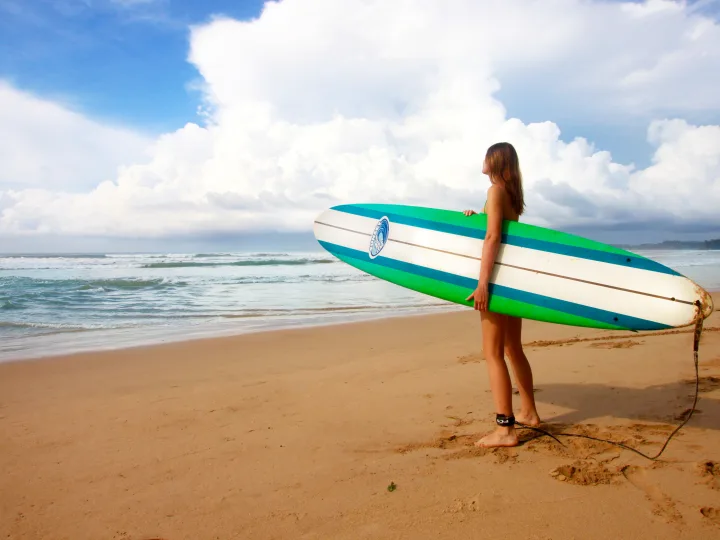
Weligama, ten minutes west, is where beginners learn to surf — a long, forgiving beach break with a dozen schools on the sand.
November to April, in line with the whales and the south-west coast’s dry season. Outside that window the monsoon makes the sea rough, most operators stop running, and the beach is not at its best.
Two nights is enough: one early morning for the boat, one day for the beach and Weligama, and time to move on to Galle or Yala.
Four hours out past the shelf edge. Blue and sperm whales, and spinner dolphins in large pods.
A palm-covered headland above the sea. Go at sunrise; by nine there is a queue for the photograph.
A rock in the middle of the bay with steps cut into it and a view back along the beach.
A long, gentle beach break and a lot of surf schools. The best place on the island to start.
On the water
A long, forgiving beach break and a great many surf schools
Wildlife
Four hours offshore for the largest animal that has ever lived

Wildlife
The densest leopard population on earth, and how to avoid the queue
November to April. February to April is the best part of it, because the wind drops and the sea is calmest — which matters a great deal on a four-hour boat trip. Outside the season most operators do not run, and the ones that do are fighting the monsoon swell.
Around 6.30am from Mirissa harbour, back between 10am and midday. Take a seasickness tablet an hour before boarding even if you are normally fine; the swell beyond the shelf edge catches people out.
No, and any operator who guarantees it is not being straight with you. Sighting rates in the peak months are high — most mornings produce something — but these are wild animals in open ocean. Some operators offer a discounted second trip if the first draws a blank; it is worth asking.
Ask what distance they keep, how they approach and how many people they carry. A responsible boat stays at least 100 metres off, approaches from the side rather than head-on, limits time with any one animal and does not overload. Crowding and cutting across whales is a real problem here, so this is worth checking before you book rather than on the jetty.
Trips that go here

Start here
A few lines is enough — your dates, roughly what you want to spend, and what you actually care about seeing. And we will reply within one working day, and a quote costs you nothing.