Scenic
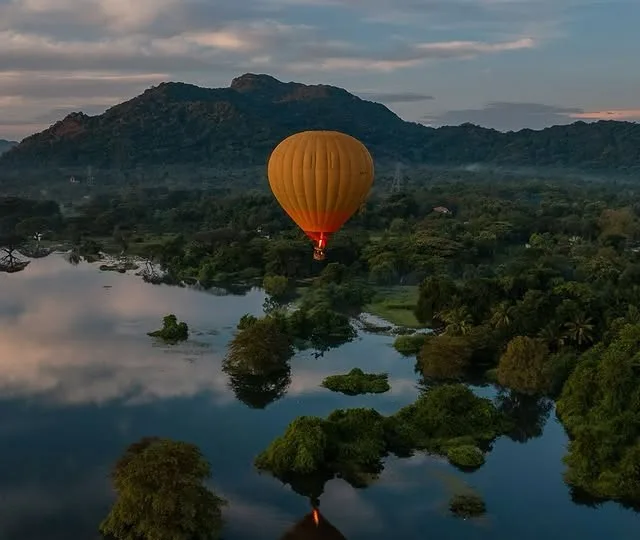
Hot air ballooning over the Cultural Triangle
An hour above Sigiriya at first light
Destination
Five caves, a hundred and fifty Buddhas
Government site fees change without much warning. We confirm the current rate when we quote your trip.
Almost everyone passes Dambulla on the way to Sigiriya, and a lot of them do not stop. That is a mistake. The Royal Rock Temple is the largest and best-preserved cave temple complex in Sri Lanka, it has been in continuous use for twenty-two centuries, and it is a UNESCO World Heritage Site in its own right.
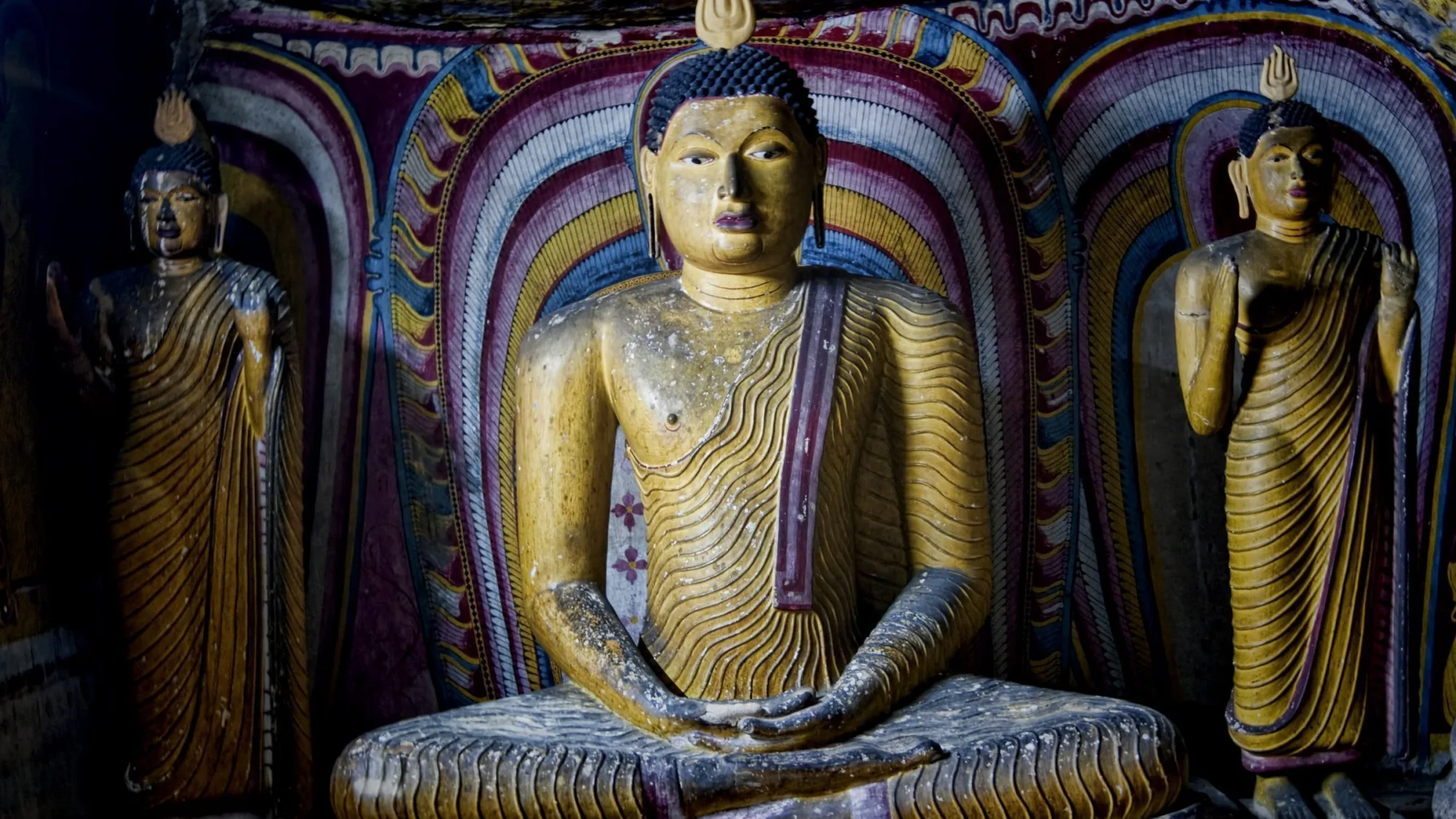
Five caves are cut into the overhang of a granite outcrop, and inside them are more than 150 Buddha images and a ceiling painted end to end with murals that follow the contours of the rock. Cave Two, Maharaja Viharaya, is the one people remember: 50 metres long, with a spring dripping from the ceiling into a vessel that has never been recorded empty.
The climb is fifteen to twenty minutes of stone steps from the car park to the terrace. It is not technical but it is steep and fully exposed, so it is hard work in the middle of the day. There are macaques on the steps — do not carry visible food and do not feed them.
The gaudy golden Buddha and museum at the bottom is a modern addition and not the temple. Walk past it and keep climbing.
Open daily from 7am to 7pm, but the ticket counter closes at 5pm, which catches people out. Entry is LKR 2,000, roughly six US dollars.
Shoulders and knees covered, hats off, shoes off at the terrace. Shoes are left with an attendant for a small fee. The terrace stone gets very hot by mid-morning — socks are worth having in your bag.
Dambulla is inland dry zone, so it works most of the year, with January to April the driest. Go early or late in the day rather than at noon: the caves are cool but the climb and the terrace are not.
Early morning is also when local pilgrims come, which is the version of the place worth seeing.
Half an hour south of Sigiriya, an hour from Habarana, and on the main road from Kandy to the Cultural Triangle. The usual arrangement is Sigiriya at dawn and Dambulla afterwards, but doing it the other way round means you have the caves largely to yourself.
The largest of the five, with a painted ceiling that follows the rock and a spring that has never run dry.
Cut from the living rock rather than built, with the disciple Ananda at the feet.
Around 2,100 square metres of painted ceiling, some of it eighteenth-century Kandyan work over much older layers.
Sigiriya rock is visible across the plain on a clear morning, which is the photograph most people miss.
Open daily 7am to 7pm, but the ticket counter shuts at 5pm — arrive after that and you will not get in, whatever the gate says. Early morning is both cooler and quieter.
LKR 2,000 for foreign visitors, roughly six US dollars, paid at the counter near the base. There is a small extra charge for the shoe deposit at the terrace.
Shoulders and knees covered, hats removed, shoes off before you step onto the terrace. It is enforced. The stone gets hot enough by mid-morning to be genuinely uncomfortable barefoot, so take socks.
Fifteen to twenty minutes of stone steps, steep and unshaded. Most reasonably mobile people manage it, but it is hard work between about ten and three, so go early or late.
Trips that go here
From $305 / person
Start here
A few lines is enough — your dates, roughly what you want to spend, and what you actually care about seeing. And we will reply within one working day, and a quote costs you nothing.