Adventure
Climbing Adam’s Peak
Five and a half thousand steps, in the dark, for a sunrise
Destination
Five thousand steps, climbed in the dark
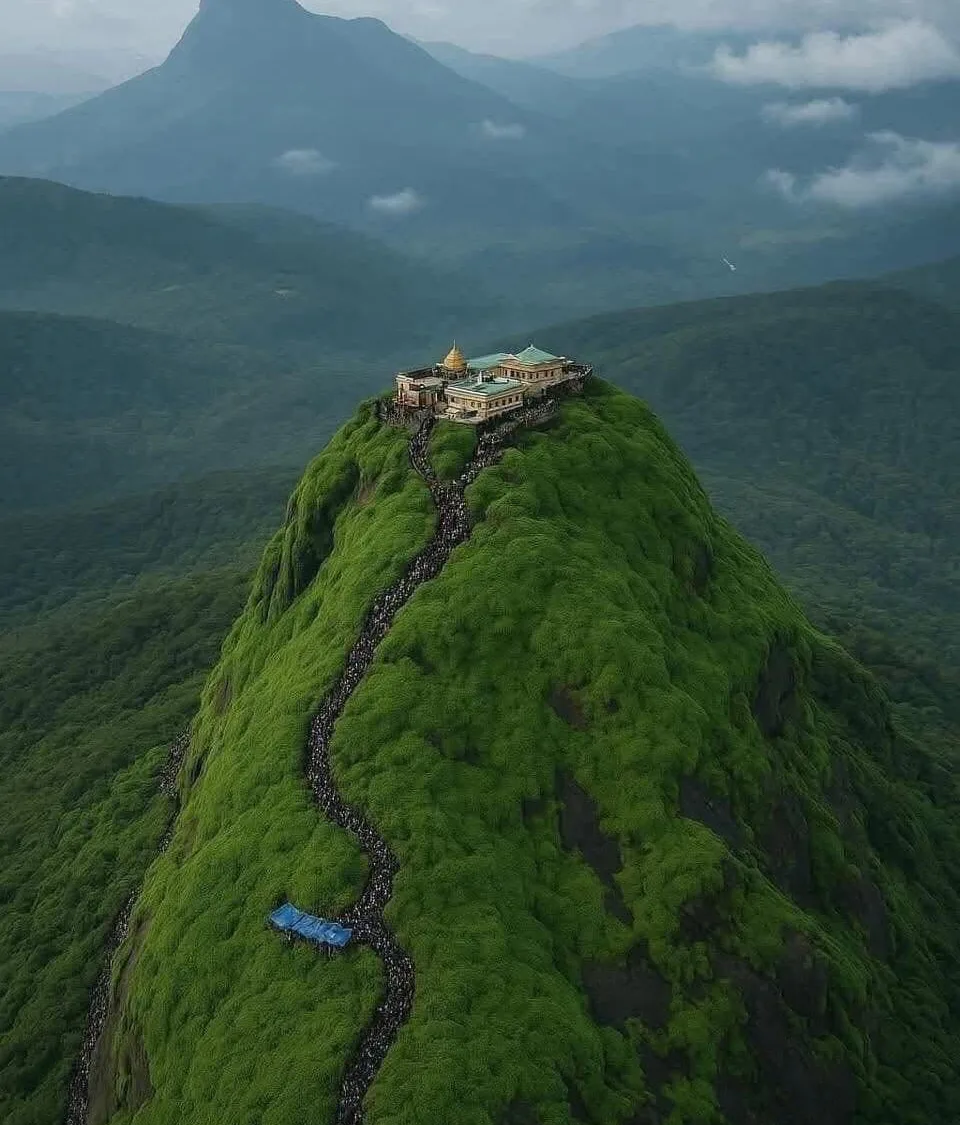
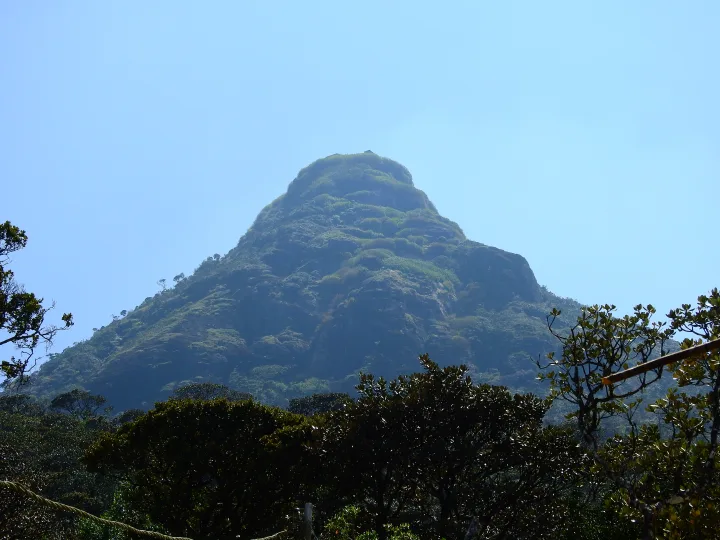
Adam’s Peak — Sri Pada, the sacred footprint — is a 2,243-metre cone in the south-west hill country with a rock formation at the summit revered by Buddhists as the Buddha’s footprint, by Hindus as Shiva’s, by Muslims and Christians as Adam’s. It is one of very few places on earth held sacred by four religions at once, and it has been climbed by pilgrims for over a thousand years.
You climb it at night. That is not for atmosphere; it is so you are at the top for sunrise, and so you are not climbing 5,500 steps in the sun.
Most people start from Dalhousie (Nallathanniya) between 2am and 2.30am. It is around 5,500 steps and takes two to four hours up depending on fitness and how busy the path is. The first third is gentle; the last third is relentless and steep.
During pilgrimage season the whole route is lit and lined with tea stalls, which makes it far easier than it sounds — you are never alone and you can stop for tea every twenty minutes. Out of season the lights are off, the stalls are shut, and it becomes a serious night hike needing a torch and proper preparation.
Going down is harder on the knees than going up is on the lungs. Take a stick.
The pilgrimage season runs from the December full moon to the May full moon, and January to April gives the best odds of a clear sunrise. Weekends and poya days are extremely busy — on a bad night the queue on the upper steps can add hours.
Go midweek. It is the single most useful piece of advice about this mountain.
Just after sunrise, if the air is clear, the peak throws a perfect triangular shadow onto the cloud and haze to the west. It is a genuine optical phenomenon rather than a tourist board claim, it lasts about twenty minutes, and it is the thing people remember longer than the summit itself.
It is cold at the top — single figures, with wind. Bring a fleece, a hat and gloves, and more water than you think. Shoes come off at the summit shrine, so socks matter.
Dalhousie is about four hours from Colombo, three from Kandy and two and a half from Nuwara Eliya. Most people arrive in the afternoon, sleep from about seven to one, climb, and drive on later that day thoroughly wrecked. Build a soft day in afterwards.
Started around 2am from Dalhousie so you reach the summit before dawn. Lit and lined with tea stalls in season.
The reason for the whole exercise, and worth every step on a clear morning.
A perfect triangle thrown onto the haze to the west. A real phenomenon, and the part people remember.
Sacred to Buddhists, Hindus, Muslims and Christians. Shoes off, and expect a queue in season.
From the December full moon to the May full moon. In that window the path is lit, the tea stalls are open and the climb is manageable for most reasonably fit people. Outside it the lights are off and it becomes a serious unsupported night hike. January to April gives the best chance of a clear sunrise.
Around 5,500 from Dalhousie, the usual starting point. Allow two to four hours up depending on fitness and the queue. The descent is harder on the knees than the ascent is on the lungs — take a walking stick, which you can buy at the bottom.
Between 2am and 2.30am from Dalhousie, to be at the top before sunrise around 6.15am. On weekends and poya days start earlier — the queue on the upper steps can add hours, and being caught below the summit at dawn is a real disappointment.
It is not technical, but 5,500 steps in the dark at altitude is genuinely demanding and the last third is steep and relentless. Anyone who walks regularly can do it. It is cold at the top — single figures with wind — so bring a fleece, and plan a soft day afterwards.
Start here
A few lines is enough — your dates, roughly what you want to spend, and what you actually care about seeing. And we will reply within one working day, and a quote costs you nothing.