
Katunayake (BIA)KandyNuwara Eliya+2 stops
Family Sri Lanka: hills, turtles and the south coast
From $430 / person
Things to do
Rice and five curries, made from the market up
Works well with children.
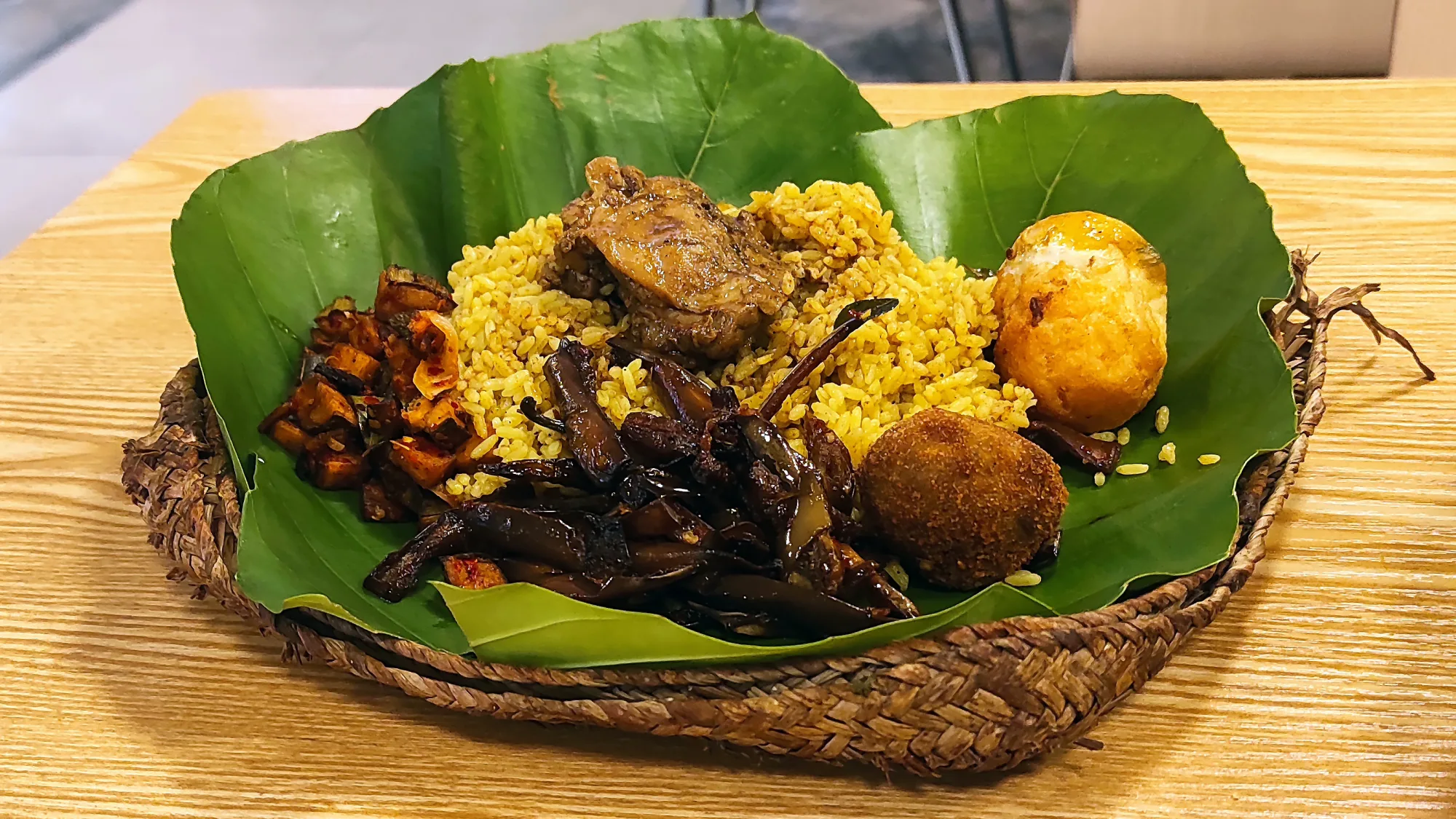
Sri Lankan food is not Indian food, and the difference is the thing a cooking class is actually for. The base is coconut rather than dairy, the souring agent is goraka or lime rather than tamarind, and a proper meal is rice with five or six small curries eaten together rather than one dish.
The good ones start at a market. You walk through with the cook, who explains what the things are — pandan, curry leaf, goraka, the difference between the four kinds of chilli on the stall, why the coconut seller is scraping rather than slicing.
Then three or four hours at the stove, usually in a family home. You will make coconut sambol by hand on a grinding stone, a dhal, a jackfruit or ash plantain curry, something tempered, and a fish or chicken curry. Rice goes on last.
Then you eat it, which takes as long as the cooking did.
The technique worth taking home is tempering — heating spices in oil until they change smell — and the first and second squeeze of coconut milk, which is the whole architecture of a Sri Lankan curry and is nothing like opening a tin.
Galle, Kandy, Ella and the south coast all have good classes, and the best ones are run out of family homes rather than hotels. Most take four to eight people. Vegetarians are extremely well served — Sri Lankan home cooking is largely vegetarian by default.
1 hour
Walking the stalls with the cook: pandan, curry leaf, goraka, and four kinds of chilli.
30 min
Scraping a coconut by hand and grinding sambol on a stone. Harder than it looks.
2 hours
Dhal, a jackfruit or ash plantain curry, something tempered, and a fish or chicken curry.
As long again
Rice with everything around it, eaten by hand if you want to do it properly.
Around USD 20 to 40 per person for a half day including the market walk, ingredients and the meal you cook. Classes run out of family homes are usually both cheaper and better than hotel versions.
Exceptionally. Sri Lankan home cooking is largely vegetarian by default — dhal, jackfruit, ash plantain, beetroot, cashew curry and a dozen kinds of green. Tell us in advance and the whole menu can be vegetarian or vegan without anything feeling omitted.
Typically coconut sambol ground by hand, a dhal, a vegetable curry such as jackfruit or ash plantain, something tempered, and a fish or chicken curry, with rice. The two techniques worth taking home are tempering spices in oil and extracting first and second coconut milk.
Yes, and most cooks are happy to have them. The market walk and the coconut scraping hold their attention; the three hours at the stove may not. Classes with four to eight people are more forgiving than private ones.
Trips that include it
From $430 / person

From $305 / person
Start here
A few lines is enough — your dates, roughly what you want to spend, and what you actually care about seeing. And we will reply within one working day, and a quote costs you nothing.