Wildlife
The Elephant Transit Home
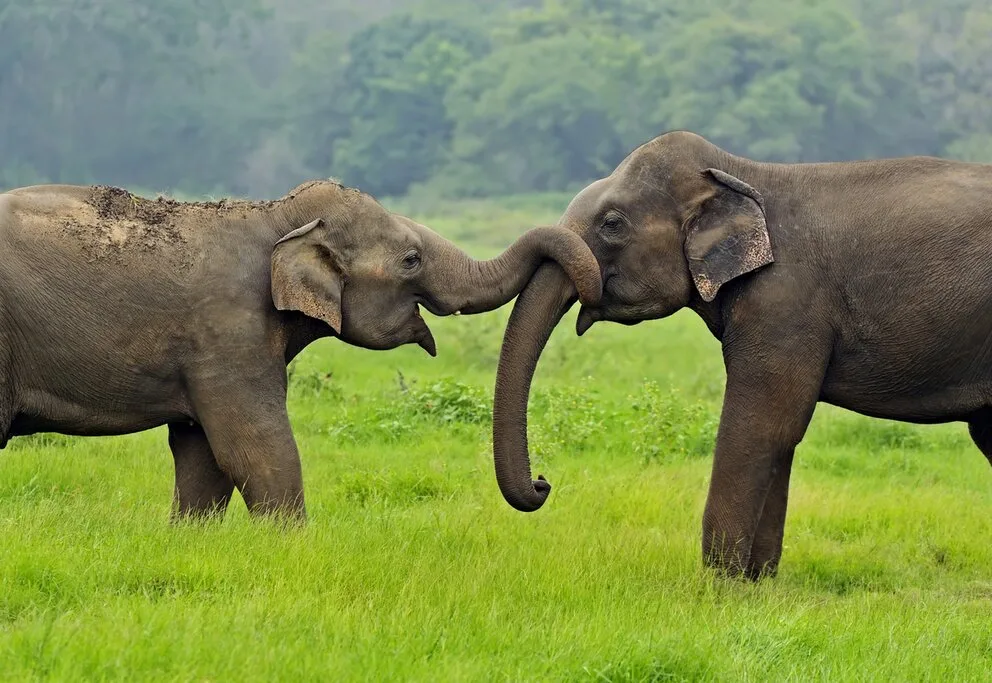
Orphaned calves, raised to be released
Destination
The best chance of a leopard anywhere
Government site fees change without much warning. We confirm the current rate when we quote your trip.
Yala is the reason most people put a safari in a Sri Lanka itinerary. Block 1, the section open to visitors, has the highest density of leopards recorded anywhere in the world, and unlike most big-cat destinations the animals here are relatively relaxed about vehicles. Elephant, sloth bear, crocodile, water buffalo and around 200 bird species share the same dry scrub and lagoons.
It is also the busiest park in the country, and being honest about that is part of planning it well.
The dry season, February to July, is the best time for leopards. Water becomes scarce, animals concentrate around known waterholes, and sightings become far more predictable. This is the opposite of the pattern on the south coast beaches, which is worth knowing when you build a route.
Block 1 normally closes for around six weeks from the start of September for the dry-season drought. Dates shift year to year. If your trip falls in that window, Kumana to the east or Wilpattu in the north-west are the alternatives, and Wilpattu in particular is quieter with good leopard numbers.
Both work, for different reasons. The morning drive leaves at 6am and catches leopards finishing a night’s hunting. The afternoon drive, from about 2.30pm, catches them as the rocks cool and they start to move again.
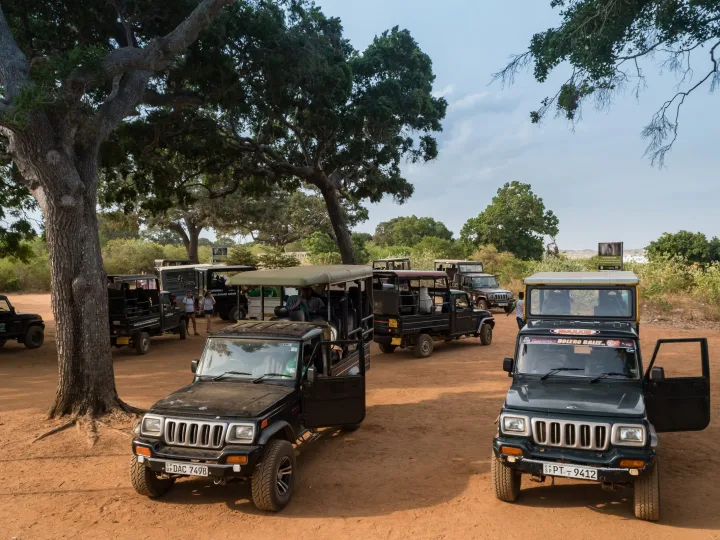
The real difference is traffic. On a busy morning more than 200 jeeps enter Block 1, and a leopard sighting can turn into a queue. A full-day permit lets you stay through the middle of the day, from around 11am to 2pm, when most vehicles have gone back to their hotels — that is when the park is closest to what people imagine. Entering through the Katagamuwa gate rather than the main Palatupana gate also avoids the worst of the morning rush.
Park entry runs to roughly USD 25–35 per adult plus 15 per cent VAT and service charges. A shared half-day safari including jeep, driver, tracker and entry is usually USD 70–80 per person; a full day is USD 120–150. Private jeeps cost more and are worth it if photography matters to you.
The difference between a good Yala morning and a bad one is almost entirely the person driving. A good tracker reads alarm calls, knows which waterholes are producing that week, and will sit quietly at a promising spot rather than chase radio reports from one jam to the next. A bad one will drive fast, brake hard and put you at the back of every queue.
We use the same handful of drivers, and we will tell you which block and which gate we are booking and why.
Yala is about five hours from Colombo, three from Mirissa and three from Ella. Two nights near the park gives you two drives, which materially improves your odds — one drive is a coin toss.
The densest leopard population recorded anywhere, and animals largely untroubled by vehicles.
Hardest of the headline animals to see, and most likely when the palu fruit ripens in early summer.
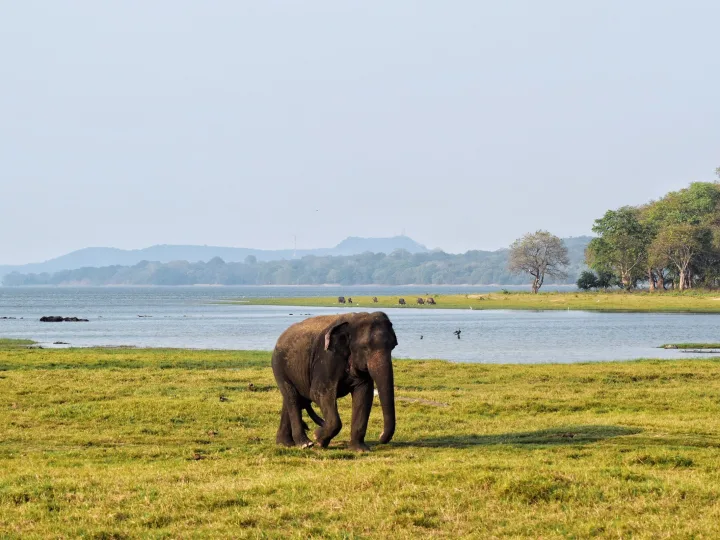
The dry season concentrates everything around a handful of tanks, which is why it is the season to come.
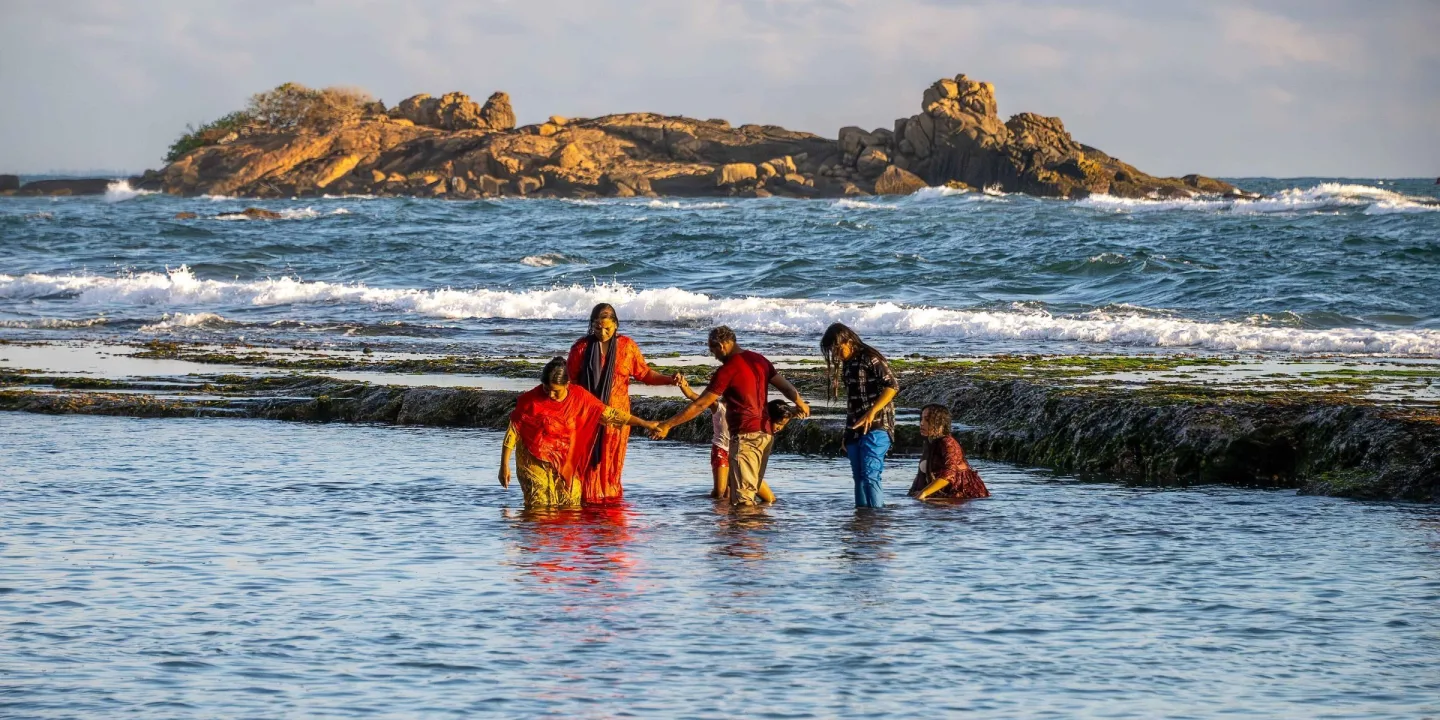
Yala runs to the sea. The dunes and lagoons along that boundary are the quietest part of Block 1.
A shared half-day safari including jeep, driver, tracker and park entry is usually USD 70–80 per person, and a full day USD 120–150. Park entry alone is around USD 25–35 per adult before 15 per cent VAT and service charges. Private jeeps cost more and are worth it if you are serious about photographs.
Morning drives leave at 6am and catch leopards ending a night's hunting; afternoon drives from 2.30pm catch them as the rocks cool. Sighting rates are similar. The bigger factor is traffic — mornings can see over 200 jeeps in Block 1. A full-day permit lets you stay through the quiet middle of the day, which is when the park feels like a park.
February to July. The dry season shrinks the available water, animals concentrate around known waterholes and sightings become much more predictable. Note that this runs counter to the best beach months on the south coast, so a combined trip needs some thought.
Block 1 normally closes for around six weeks from the beginning of September, for the height of the drought. Exact dates move each year. If your trip falls in that window, Kumana to the east and Wilpattu in the north-west both stay open, and Wilpattu is quieter with good leopard numbers.
No. Yala gives you the best odds in the world, but they are wild animals. Two game drives rather than one makes a real difference — a single drive is close to a coin toss, two shifts it substantially in your favour. That is why we build in two nights near the park rather than one.
Start here
A few lines is enough — your dates, roughly what you want to spend, and what you actually care about seeing. And we will reply within one working day, and a quote costs you nothing.